Lahore Resolution / Pakistan Resoution

 Lahore Resolution / Pakistan Resolution

(A Landmark toward destiny of Pakistan)


1.      Introduction

·         Place:                                Minto Park (Iqbal Park), Lahore,

·         Day and Date:                   23rd March, 1940

·         Words of Resolution:        400 words and four short paragraph

·         Session:                             27th Session of All India Muslim League

·         President of Session          M.A. Jinnah

·         Resolution presented by:  Sher-e-Bengal, Maoulvi Faz-ul-Haq

·         Prominent Personalities present at that Session: Sir Abdullah Haroon, Qazi M. Isa, I.I. Chundgrigarh, Sayad Rauf Shah, Dr. Alam, Sayyid Zakir Ali, Abdul Hamid Qadri, Chaudry Khaliquzaman, Nawab M ismail Khan, Nawab Bahadur Yar Jhang, A.K. Faz-ul-Haq, Sardar Abdur Rab Nashtar, Khawaja Nazimuddin, Abul Hashim, Sardar, Aurangzaib Khan, Malik Barkat Ali,

·         No. of People attended the Session:         More than fifty thousand

2.       Idea of Partition of Sub Continent proposed by various leaders, and scholars, like

a.      Khair brothers, Syed Jamal ud din Afghani, Abdul Haleem Sharar, Maulana M Ali Jauhar,   

b.      C.R.Das, Lala Lajpat Ray in a letter they categorically stated that the Hindus and the Muslims were two separate and distinct nations which could never be merged into a single nation.

c.       Josheph Stalin of Russia

d.      Blunt and John Bright (British intellectuals)

e.      Resolution passed by AIML of Sindh

f.        Ch. Rehmat Ali Proposed name of Pakistan in his pamphlet “Now or Never” in 1933
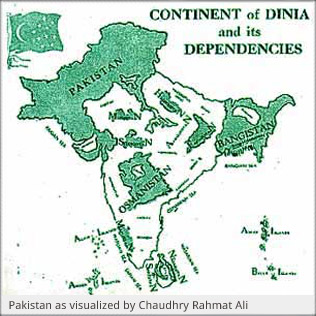

g.      “Pakistan was Inevitable” a book written by Syed Hassan Riaz, whom M.A. Jinnah gave an interview and clarified that AIML decided division of subcontinent in 1930 and till 1940 efforts were done to make mind of masses.

h.      Allahabad Address of Allama Iqbal in 1930 in which he proposed the formation of a Muslim state in the North West of subcontinent.

3.      Major aspects of presidential address of M.A. Jinnah

a.      The Muslims and Hindu are separate Nations. 

“Both Hindu and Muslims belong to different religious philosophies, social customs and literatures. They neither intermarry nor inter dine together, and, indeed they belong to two different civilizations which are based on conflicting ideas and conceptions. Their aspects on life and of life are different. It is quite clear that Hindu and Muslims derive their inspiration from different sources of history. They have different epics, different heroes, and different episodes. Very often the hero of one is the foe of the other and likewise their victories and defeats overlap. To yolk together two such nations under a single state, one as a numerical minority and the other as a majority, must lead to growing discontent and final destruction of any fabric that may be so built up for the government of such a state”

b.      Muslims are a nation to any definition of nationhood. Thus they must have their separate homeland. 

23rd March special: The resolutions after the Resolution - DAWN.COM

c.       The problem of subcontinent is not a communal issue of Hindu Muslim, but it is an international issue and must be treated according to international law

d.      If Czechoslovakia got separate identification as a result of the partition and Ireland got freedom from England, independence of Spain and Portugal came into being due to partition,  so formation of a separate Muslim state in South Asia can also logical.

e.      Muslim’s Security must be insured in Hindu majority areas after partition of subcontinent.

4.      Important points of Lahore Resolution

a.      No constitutional plan will be workable in this country or accepted by the Muslims except the partition of subcontinent.

b.      Geographically contiguous units are demarcated into regions which should be so constituted that Muslims majority areas such as Eastern and North Western zones of India should be grouped to constitute “independent states” in which constituent units shall be autonomous and sovereign. 

The new political map of Pakistan.
Present Political Map of Pakistan

c.       That adequate, effective and mandatory safeguard should be specifically provided in the constitution for minorities in these units and in regions for the protection of their religious, cultural, economic, political and administrative and other rights and interests in consultation with them.

d.      And in other parts of India, where Muslims are in a minority, adequate, effective and mandatory safeguards should be specifically provided in the constitution for them and other minorities for the protection of their religious, cultural, economic, political and administrative and other rights and interests in consultation with them.

5.      Reaction on Lahore Resolution

a.      Hindu Leaders

                                                                          i.      Rajagopaacharia: Mr. Jinnah’s step towards the partition of India is like a dispute between two brothers over the ownership of a cow and the two brothers ultimately divide the cow between themselves by cutting it into two parts.

                                                                        ii.      Ghandhi: The two nation theory is a lie. I violently stop the partition.  My soul rebel against this view point.

b.      Hindu Press:

                                                                          i.      Partap, Bnade Matram, Milap, Tribune, and Modern Review, Amrita Bazar Patrika, and Hidustan Times called Pakistan Resolution was horrible and unacceptable.

c.       British Press

                                                                          i.      The Times, The Manchester Guardian, the Daily Herald and the Daily Telegraph totally ignored the plan and give a brief news only.

d.      Muslim Scholars

                                                                          i.      Moulana Shabbir Ahmad Usmani, Maulana Zafar Ahmed Ansari, Maulana Asharf Ali Thanvi and some other Muslim leaders support the plan.

                                                                        ii.      Muslim League adopted the terminology of Pakistan Resolution instead of Lahore Resolution because Hindu press declared this plan as demand for Pakistan.

6.      Conclusion

a.      According to Governor of Punjab. H. Craik, there were three results clearly emerged from Lahore Session i.e.

                                                                          i.      The importance of the All India Muslim League as the representative Muslim Organization had been immensely enhanced.

                                                                        ii.      Jinnah’s own personal prestige had greatly risen. His position as the only AIML leader was now unchallenged and in practice he alone was in a position to dictate the League’s policy

                                                                      iii.      Muslim opinion was now outwards at least unanimous in favor of the partition of India


References

K.K Aziz, “Britain and Muslim India”

Shafiuddin Pirzada, “Foundation of Pakistan”

Amen Zubairi, “Siasat-e-Millia”

Abdul Kalam Azad, “India wins Freedom”

Trek to Pakistan, Ahmad Saeed and Kh. Mansoor Sarwar

Pakistan in the Formative Phase


Key Developments in Foreign Policy


Developments in Foreign Policy

All the following information is collected from ministry of foreign affairs of Pakistan,  Pakistan and World Affairs by Shamshad Ahmad Hilal Magazine, Jahangir World Times Magazine, Global Village Magazine, Global Age of KIPS, and research article of internet sources. These are compiled notes from these sources.

 Relationship with Saudi Arabia

The high frequency of leadership level exchanges between Saudi Arabia and Pakistan was witnessed in year 2019. Prime Minister Imran Khan undertook at least 4 visits to Kingdom of Saudi Arabia since May 2019. Saudi-Pak Supreme Coordination Council was established during the visit of Saudi Crown Prince; Substantial decrease in visa fee by Saudi Arabia; Initiation of Road to Makkah Project from Islamabad and increase in Hajj quota by Saudi Arabia. Saudi Arab also announced 20 billion US$ investment commitments in Pakistan.

Relationship with China

Prime Minister Imran Khan visited the all-weather strategic partner China twice during 2019, which played an important role in reinforcing our time tested and deep-rooted ties. Important strides were made in the further advancement of the transformational project of CPEC. Pakistan hosted the third China –Afghanistan –Pakistan Foreign Minister’s Dialogue in Islamabad on 7th September. Under this platform, Joint Workshop for junior diplomats was also conducted in Islamabad along with U-19 Cricket tournament in China.

Relationship with Turkey

Prime Minister Imran Khan also paid an official visit to the Republic of Turkey. The visit contributed immensely to further strengthening of the fraternal, multi-dimensional relationship with Turkey.

Relationship with USA

On the invitation of President Donald J. Trump, Prime Minister Imran Khan visited the United States of America in July. This was the first summit-level engagement between Pakistan and the United States since both leaders assumed their respective offices. Pakistan-US Women’s Council launched in September 2019.

Representation of Pakistan in international organizations

Prime Minister Imran Khan also led the Pakistan delegation during the high-level week of the UN General Assembly Session in New York in September and delivered his landmark address focused primarily on Kashmir. He also visited Bishkek, Kyrgyz Republic to attend the 19th Meeting of the Council of the Heads of State (CHS) of the Shanghai Cooperation Organization (SCO). During visit of foreign minister to Brussels in June, the Foreign Minister signed the Pakistan-EU Strategic Engagement Plan.

Pakistan continued to maintain its strong profile at the international level through its membership to UN/international bodies with a success rate of 100% in all elections that Pakistan contested in 2019.

Pakistan was successfully elected to numerous UN/international organizations during 2019. The major UN bodies are:

·         Vice President of Bureau of COP 26;

·         membership to Commission on Narcotic Drugs (CND) for the term 2020-23;

·         Executive Board of the United Nations Educational, Scientific and Cultural Organization (UNESCO) for the term 2019-23; and

·         Co-chair of the Green Climate Fund (GCF) for the year 2020; and

·         Vice President of UN Economic and Social Council.

Pakistan presented its first Voluntary National Review on the status of implementation of Sustainable Development Goals (SDGs) in the country, during the High-Level Political Forum held under the auspices of the United Nations in New York in July 2019. Government’s resolve toward effective and thorough implementation of SDGs, particularly its initiatives for poverty alleviation and uplift of the downtrodden, was effectively put forward and widely commended by the international community.

Relationship with other gulf Countries

In 2019, the Prime Minister also undertook visits to UAE, Qatar, Iran and Bahrain. These visits have been highly successful and the dividends have been evident, both for the short and long term. Agreement on transforming the existing relations with UAE into “Long Term Strategic Economic Partnership” and commitments of $10 billion investment from UAE.

·         Removal of visa restrictions by Bahrain.

·         Initiation of construction work of King Hamad Nursing University in Islamabad by the Government of Bahrain.

·         Removal of ban on export of rice to Qatar.

·         Increase in manpower export to Qatar by 100,000 and opening of Qatar Visa Centers, Islamabad and Karachi.

·         Removal of visa restrictions on Pakistani Zaireen to attend Arbaeen in Iraq.

·         Signing of 07 MoUs with Saudi Arabia, 01 with UAE, 03 with Qatar, 02 with Oman and 4 with Bahrain.

Pakistan and Afghan Peace Process

Prime Minister’s leadership level contacts were instrumental in promoting Pakistan’s positive role and contribution to the Afghan peace & reconciliation process. The Prime Minister also took the initiative to help defuse tensions in the Middle East/Gulf region and press for resolution of differences and disputes through political and diplomatic means. Torkham crossing point was inaugurated on 24/7 basis. Pakistan also hosted the first review session of Afghanistan-Pakistan Action Plan for Peace and Solidarity in June 2019.

Opening of Kartarpur Corridor

In line with his vision and commitment, Prime Minister Imran Khan inaugurated the Kartarpur Sahib Corridor on 9 November 2019 at a ceremony that was held in Gurdwara Darbar Sahib Complex, Kartarpur. Around 12,000 pilgrims were present at this ceremony. The dignitaries present included former Indian Prime Minister Dr. Manmohan Singh.

Relationship with European Nations and European Union

4th review of the Enhanced Strategic Dialogue between Pakistan and the UK was held in London from 15 to 19 June 2019. The Foreign Minister led Pakistan’s delegation for the ESD. High Representative/Vice President of the European Union, Ms. Federica Mogherini visited Pakistan on 25-26 March 2019 for the fourth Pakistan-EU Strategic Dialogue.

Relationship with African nations

The Ministry of Foreign Affairs in collaboration with the Ministry of Commerce and the Board of Investment hosted an Envoys Conference focused on Africa on 27-28 November 2019. The Conference deliberated ways and means to enhance foreign direct investment and trade particularly, as part of “Economic Diplomacy”.

Diplomatic outreach following Indian illegal Action in IOJ&K on 5 August, 2019

The Foreign Minister addressed detailed letters to the President of the United Nations General Assembly, the Security Council and the High Commissioner for Human Rights, keeping them apprised of the evolving situation in IOJ&K. An emergency session of the contact group on Jammu & Kashmir was immediately called on Pakistan’s request on 6th August, 2019 as a result of which the OIC IPHRC delivered a strong statement condemning India’s atrocities in IOJ&K. Subsequently, in September, the OIC Contact Group spearheaded by the Foreign Minister issued a Ministerial Communique on the Jammu & Kashmir dispute, on the sidelines of the UNGA. The Foreign Minister represented Pakistan in the 42nd session of the United Nations Human Rights Council. Joint statement on Jammu & Kashmir was delivered on behalf of over 50 countries on 10th September, 2019.

In his address to the United Nations General Assembly the Prime Minister extensively highlighted the Jammu & Kashmir issue and the danger its non-resolution represented for regional as well as global peace and security.

The United Nations Security Council’s meeting on 16 August on Jammu & Kashmir, after a gap of 55 years, was reflection of the disputed status of Jammu & Kashmir and recognition by the international community of the gravity of the situation. Two successive public hearings on human rights situation in Indian Occupied Jammu and Kashmir were held in the U.S. Congress as well as multiple statements by the UN Secretary General and Human Rights Commissioner, reinforced the internationally recognized disputed nature of the Indian Occupied Jammu and Kashmir. Tom Lantos Human Rights Commission undertook debate on the situation in Indian Occupied Jammu & Kashmir in November 2019.

The Kashmir issue was raised in other Parliaments as well, including UK, EU, France, Iran and so on. Over 80 members of U.S. Congress on the Kashmir situation made statements, while a similar number from UK Parliament expressed their concerns.

The international civil society organizations and international media validated Pakistan’s perspective on the dire human rights and humanitarian situation in occupied Jammu & Kashmir and risks to regional peace & security through their independent reporting.

 Other Significant Developments in 2019


·         UN declared Islamabad as a family station.

·         Visa regime was liberalized to promote trade and tourism.

·         Economic diplomacy remained a main pillar of foreign policy to attract foreign direct investment and promote trade.

·         Canada included Pakistan in Students Direct Stream Programme. SDS is a fast track visa process for the Pakistani students.

·         Pakistan and Brazil signed ‘Memorandum of Understanding on Defence Cooperation’ on 5th August 2019.

·         Pakistan and Russia signed a Joint Statement on “No First Placement of Weapons in Outer Space” on 22 May 2019 in Bishkek. The Joint Statement was signed by the two Foreign Ministers and is a reflection of convergence of views between Pakistan and Russia on prevention of arms race in Outer Space.


Pakistan’s achievement in international arms control regime


In December 2019, Pakistan Institute of Engineering and Applied Sciences (PIEAS) was designated by the International Atomic Energy Agency (IAEA) as a Collaborating Centre to support Member States on research, development and capacity building in the application of advanced and innovative nuclear technologies.

Pakistan was re-elected as a member of the Organization for the Prohibition of Chemical Weapons (OPCW) Executive Council for another two-year term (2020-2021). Pakistan’s candidature was endorsed by the Conference of States Parties to the Chemical Weapons Convention (CWC) which was held in The Hague from 25-29 November 2019.


Science Diplomacy of Pakistan


Ministry of Foreign Affairs launched its Science Diplomacy initiative in September 2018 with the designation of a focal point (Science Diplomacy Division) to act as a liaison between national S&T stakeholders and international partners. Pakistan Mission in Toronto facilitated interaction between National Institute of Optics and Lasers of Pakistan and Princess Margaret Hospital which led to a joint project for production of cancer diagnosis and treatment equipment in Pakistan.


Relationship with Central Asian States


·         MoU on Establishment of Turkmenistan – Pakistan Joint Business Council (JBC) between the Chamber of Commerce and Industry of Turkmenistan (CCI of Turkmenistan) and the Federation of Pakistan Chambers of Commerce and Industry (FPCCI).

·         Heads of – Host Government Agreements Turkmenistan – Afghanistan – Pakistan – India Gas Pipeline Project.

https://www.youtube.com/watch?v=sen2HixgZJk

CSS Guidelines for those students who will appear in CSS 2021\


 https://www.youtube.com/watch?v=sen2HixgZJk

English Grammar and Composition Full Syllabus MOCK Test) CSS Test Session Series, Final Phase, For CSS Examination 2021)

 Full Syllabus MOCK Test)

English Grammar and Composition

CSS Test Session Series, Final Phase,

For CSS Examination 2021)

 TIME ALLOWED:                                              THREE HOURS              

 PART-I(MCQS):                                                  MAXIMUM 30 MINUTES

 PART-I (MCQS) MAXIMUM MARKS =          20       

       PART-II MAXIMUM MARKS =                               80


                                                                            (Part I)

Synonyms

1:Zest

a)      gusto

b)      cram

c)      worry

d)     trial

2:haggle

a)      tired

b)      climb

c)      decrease

d)     bargain

3: throng

a)      Garment

b)      bell

c)      Mass

d)     weight

4:irksome

a)      outrageous

b)      fearsome

c)      impoverished

d)     annoying

5:saccharine

a)      leave

b)      sweet

c)      arid

d)     quit

6.Chimera

a)      chimney

b)      protest

c)      illusion

d)     panache

7.sacrosanct

a)      prayer

b)      sanctuary

c)      pious

d)     sacred

8. stentorian

a)      violent

b)      misbegotten

c)      loud

d)     stealthy

9. sumptuous

a)      delirious

b)      gorgeous

c)      perilous

d)     luxurious

10. louche

a)      gauche

b)      fine

c)      brilliant

d)     indecent

Antonyms

Which of these words is most nearly the opposite of the word provided?

1. philistine

a)      novice

b)      Intellectual

c)      pious

d)     debutante

2.germane

a)      Irrelevant

b)      indifferent

c)      impartial

d)     improvident

3.demur

a)      Embrace

b)      Crude

c)      Boisterous

d)     Falter

4.pit

a)      group

b)      peak

c)      select

d)     marry

5.rotund

a)      Round

b)      Unimportant

c)      Thin

d)     Dull

6.Brazen

a)                  Bashful

b)                  Boisterous

c)                  Noisy

d)                 Heated

7.Malodorous

a)      Acrid

b)      Pungent

c)      Fragrant

d)     Delicious

8.pique

a)      value

b)      gully

c)      smooth

d)     Soothe

9.abridge

a)      shorten

b)      extend

c)      stress

d)     easy

10. awe

a)      Borrow

b)      Shallow

c)      Low

d)     Contempt


(Part II)


1.      Trace the grammatical errors from the following sentences and write correct sentences  (5)

                  i.)            The goats fled in haste for a leopard entered the fold.

                ii.)            I remember him throwing a stone at the dog.

              iii.)            No sooner I had fallen than they ran away.

              iv.)            He asked me did I know him?

                v.)            You must finish this within 12 o’clock

2.      Make précis of the following passage (20)

The thing above all that a teacher should Endeavour to produce in his pupils if democracy is to survive, is the kind of tolerance that springs from an Endeavour to understand those who are different from ourselves. It is perhaps a natural impulse to view with horror and disgust all manners and customs different from those to such we are use. Ants and savages put strangers to death. And those who have never traveled either physically or mentally find it difficult to tolerate the queer ways and outlandish beliefs of other nationals and other times other sees and other political parties. This kind of ignorant intolerance is the antithesis of civilized outlook and is one of the gravest dangers to which cur over crowded world is exposed. The educational system, ought to be designed to correct it, but much too little is done in this direction at present. In every country nationalistic feeling is encouraged and school children are taught what they are only too ready to believe, that the inhabitants of other countries are morally and intellectually inferior to those of the country in which the school children happens to reside. In all this the teachers are not to blame. They are not free to teach as they would wish. It is they who know most intimately the needs of the young. It is they who through daily contact have come to care for them. But it is not they who decided what shall be taught or what the methods of instruction are to be.

3.      Read the following passage and answer the question given at the end of paragraph in your own words. (20)

Philosophy of Education is a label applied to the study of the purpose, process, nature and ideals of education. It can be considered a branch of both philosophy and education. Education can be defined as the teaching and learning of specific skills, and the imparting of knowledge, judgment and wisdom, and is something broader than the societal institution of education we often speak of. Many educationalists consider it a weak and woolly field, too far removed from the practical applications of the real world to be useful. But philosophers dating back to Plato and the Ancient Greeks have given the area much thought and emphasis, and there is little doubt that their work has helped shape the practice of education over the millennia. Plato is the earliest important educational thinker, and education is an essential element in "The Republic" (his most important work on philosophy and political theory, written around 360 B.C.). In it, he advocates some rather extreme methods: removing children from their mothers' care and raising them as wards of the state, and differentiating children suitable to the various castes, the highest receiving the most education, so that they could act as guardians of the city and care for the less able. He believed that education should be holistic, including facts, skills, physical discipline, music and art. Plato believed that talent and intelligence is not distributed genetically and thus is be found in children born to all classes, although his proposed system of selective public education for an educated minority of the population does not really follow a democratic model.

Aristotle considered human nature, habit and reason to be equally important forces to be cultivated in education, the ultimate aim of which should be to produce good and virtuous citizens. He proposed that teachers lead their students systematically, and that repetition be used as a key tool to develop good habits, unlike Socrates' emphasis on questioning his listeners to bring out their own ideas. He emphasized the balancing of the theoretical and practical aspects of subjects taught, among which he explicitly mentions reading, writing, mathematics, music, physical education, literature, history, and a wide range of sciences, as well as play, which he also considered important.

During the Medieval period, the idea of Perennialism was first formulated by St. Thomas Aquinas in his work "De Magistro". Perennialism holds that one should teach those things deemed to be of everlasting importance to all people everywhere, namely principles and reasoning, not just facts (which are apt to change over time), and that one should teach first about people, not machines or techniques. It was originally religious in nature, and it was only much later that a theory of secular perennialism developed. During the Renaissance, the French skeptic Michel de Montaigne (1533 - 1592) was one of the first to critically look at education. Unusually for his time, Montaigne was willing to question the conventional wisdom of the period, calling into question the whole edifice of the educational system, and the implicit assumption that university-educated philosophers were necessarily wiser than uneducated farm workers, for example.

4.      Change the following sentences from direct to indirect or vice versa.(5)

                  i.)            He wished her success.

                ii.)            Yaqub said to me, “ Can you spare some money for me”

              iii.)            I said to him, “Will you come tomorrow?”

              iv.)            I asked him who he was.

                v.)            Najma said to her companions, “Let me go on with my work, please.”

5.      Make sentences (any five) from the following pair of words. (10)

                  i.)            Atheist, agnostic

                ii.)            Gourmand, gourmet

              iii.)            Prig, snob

              iv.)            Circumscribe, proscribe

                v.)            Decry, descry

              vi.)            Insidious, invidious

            vii.)            Censor, censure

6.      Make sentences from (any five) following idiomatic phrases. (5)

                  i.)            To cleanse the Augean stables

                ii.)            Cut the guardian knot

              iii.)            To cross the Rubicon

              iv.)            Fabian tactics

                v.)            Dogged by ill luck

              vi.)            The whirligig of time

            vii.)            Waifs and stray

7.      Punctuate the following sentences with suitable punctuation marks. (5)

                  i.)            blest is the man who has found his work let him ask no other blessedness.

                ii.)            It was leveled hardened widened by very slow degrees

              iii.)            It is an excellent work carefully compiled copiously illustrated and well arranged.

              iv.)            Obviously a work must have charm or it cannot succeed and the charm will depend on very complex conditions of the artist’s mind.

                v.)            We are all and who would not be offended at unkind treatment 

8.      Translate the following paragraph in English (10)